Bank Card Alert Notice
Be aware that criminals make use of a variety of physical and digital tactics to steal your card or its data, often relying on high-tech devices or psychological manipulation.
Physical & ATM Tactics
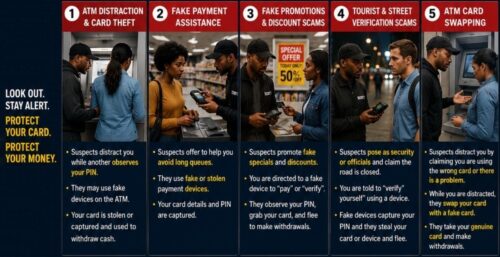
Card Skimming & Shimming: Thieves install hidden, wafer-thin devices over legitimate card readers at ATMs, gas pumps, or retail terminals. Skimmers then capture data from the magnetic stripe on your bank card. Shimmers are an evolution that sits inside the reader to steal information from your card’s chip.
Hidden Cameras & Thermal Imaging: Small pinhole cameras are often hidden near keypads to record your PIN as you type it. Some criminals even use thermal imaging attachments on smartphones to detect the “heat signature” left on buttons after you’ve pressed your PIN.
Card Trapping: A thin sleeve or device is inserted into the ATM slot to physically trap your card. Once you leave to seek help, the criminal retrieves it.
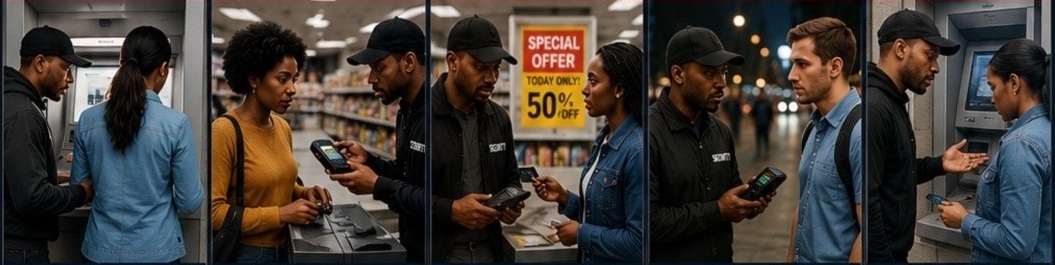
Distraction Scams (Card Swapping): While you are at an ATM, a criminal might distract you (e.g., by dropping money or asking a question) while an accomplice quickly swaps your card for a fake one.
Wireless & Digital Tactics
Ghost Tapping: Also known as “digital pickpocketing,” scammers use portable point-of-sale (POS) devices in crowded places like malls or trains. They hold the device close to your wallet or pocket to trigger a “tap-to-pay” transaction without you ever knowing.
Phishing & Spoofing: You might receive urgent texts or emails, such as a fake “unpaid toll” notice, that pressure you to click a link and enter your card details on a cloned website.
Public Wi-Fi Interception: Hackers use “man-in-the-middle” attacks on unsecured Wi-Fi (like in coffee shops) to intercept the data you send, including credit card numbers.
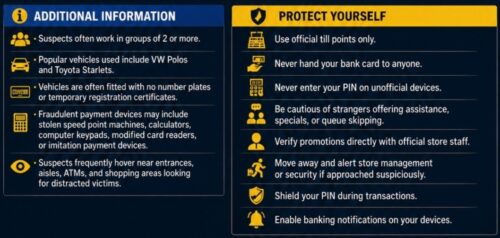
How to Protect Yourself
Inspect the Machine: Before inserting your card, check for loose parts, sticky residue, or anything that looks bulky or out of place.
Cover Your PIN: Always use your other hand to shield the keypad when entering your PIN to block both cameras and shoulder surfers.
Use Mobile Wallets: Services like Apple Pay or Google Pay are generally safer because they use “tokenization,” meaning they don’t share your actual card number with the merchant.
RFID-Blocking Gear: Consider an RFID-blocking wallet or sleeve to prevent wireless “ghost tapping” in crowds.
Set Alerts: Use your bank’s app to set up real-time notifications for every transaction, allowing you to spot and report fraud immediately.