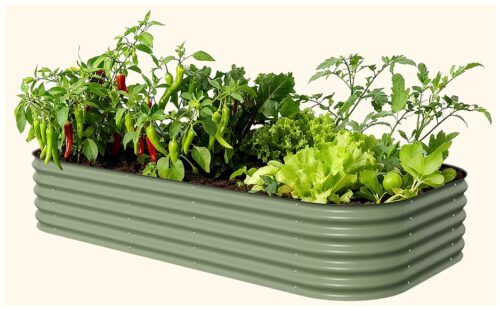
Quick Guide to Raised Beds
HOW TO FILL YOUR RAISED BEDS FOR FREE
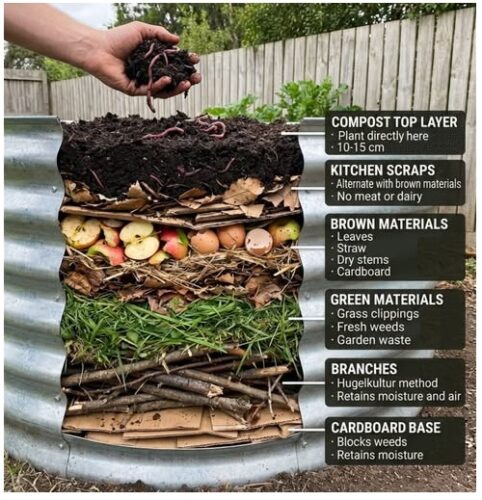
You can easily save on topsoil and compost by using materials you already have to fill up your raised beds. By also using the layering technique will guarantee that you’ll have rich fertile growing medium within two years. During the whole process you’ll be avoiding the unnecessary cost of purchasing topsoil and bagged compost by the cubic metre. The success of the layering technique is obtained by the varied decomposition speed of each layer as they’ll break down at a different rate, releasing nutrients gradually over months. The cardboard base suppresses weeds and retains initial moisture. Branches create air pockets and drainage also known as the hügelkultur principle while green materials supply nitrogen, brown materials provide carbon, and together they convert into stable humus.
HOW TO BUILD IT
LAYER by LAYER from base to surface…
Cardboard base:
Plain brown cardboard, overlapped with no gaps, tape and staples removed. Blocks weeds and retains moisture from the first watering.
Branches and sticks:
Thick and thin mixed together. Creates structure, air pockets, and long-term water retention as the wood slowly absorbs and releases moisture. Branches break down over two to three years, continuing to feed the bed.
Green materials:
Fresh grass clippings, annual weeds (before seeding), fresh kitchen vegetable scraps. These decompose quickly and release nitrogen.
Brown materials:
Fallen leaves, straw, dry plant stems, torn cardboard. Two parts brown to one part green is the ratio to aim for. If green dominates, the heap ferments and smells.
Kitchen scraps:
Fruit and vegetable peelings, coffee grounds, eggshells, teabags. Mix with brown material. Never add meat, dairy, or cooked food with oils.
Compost Top Layer:
The top 10 to 15 cm of good-quality compost is the layer you plant directly into on day one. The lower layers take six to twelve months to break down fully, but roots follow the decomposition downward as it progresses.
Key points:
Water each layer thoroughly as you build. Dry materials do not decompose. The bed should feel as damp as a wrung-out sponge. Expect the bed to settle by 30 to 40 percent in the first year as materials compress. Simply add more compost to the surface to maintain the level.